A composer’s inspiration is the stuff of Romantic fantasy. Music, especially instrumental music, can be so abstract that we hunger for any human explanation for its creation. It’s why music appreciation courses and books spend so much effort on biographical information. To know the composer is to know the music. So, we lean heavily on stories involving war, death, love, grand natural vistas, even animals (like birds.) When Beethoven supposedly tells his first biographer that the famous opening of his fifth symphony represented “fate knocking at the door”, we interpret everything we hear through that filter.
It is frustrating for the average listener, then, to learn that most music has rather pedestrian origins. For every song born from a love affair, there are dozens that are the result of a composer just doing his job. A famous anecdote tells of a doting fan of Rachmaninoff asking him what inspired his world-renowned Prelude in c-sharp minor. His laconically Russian response? “Forty rubles.” Sometimes, a composer’s inspiration is next month’s rent.
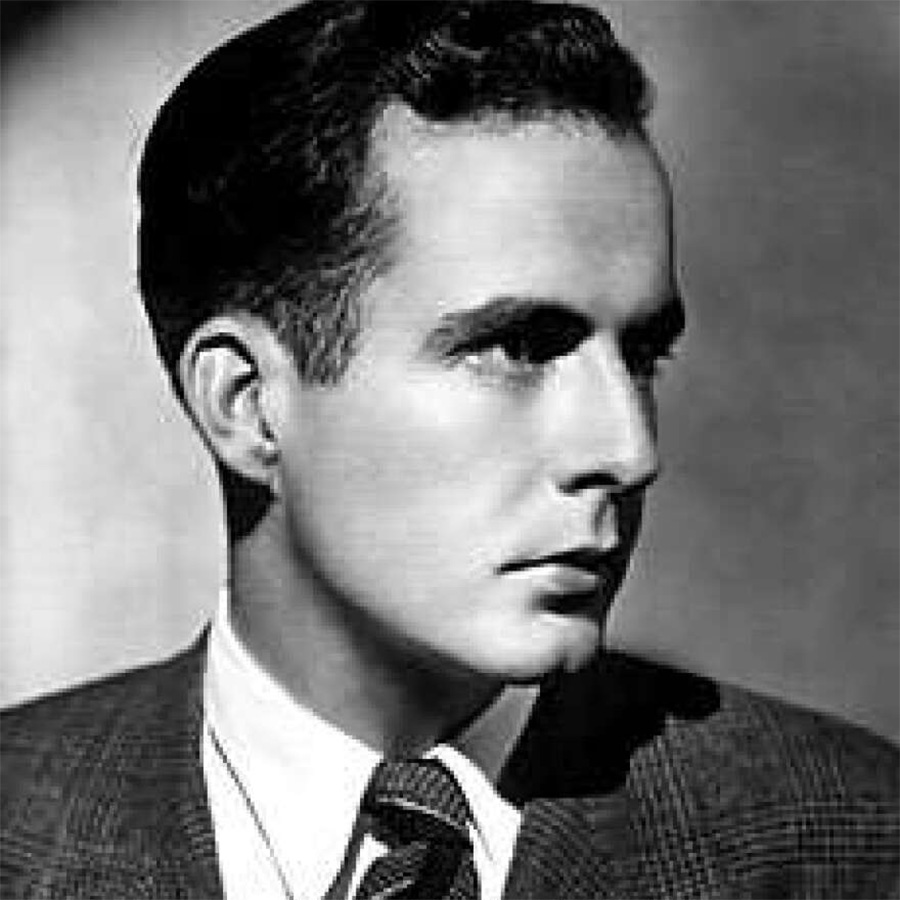
Such is the case with Samuel Barber (1910-1981) and his magnificent Violin Concerto, Op. 14. At the close of the 1930s, as the entire world stood yet again on the brink of war, the philanthropist Samuel Fels commissioned Barber to compose a work for a recent graduate of the Curtis Institute, violinist Iso Briselli. Barber traveled to Switzerland, where he began composing the first two movements of a three-movement concerto. The outbreak of war necessitated his return to the United States, where he eventually finished the work. However, both the commissioner and the performer were underwhelmed with the music and threatened to turn the work into a musical camel, complaining of the music’s supposed shortcomings and enlisting one of Briselli’s teachers to make “improvements”. Barber held his own, though, even returning the commission money when Briselli refused to perform the work in his debut concert.
The Music
I mention all of this about fanciful storytelling to help you guard against undue Romanticism as you listen to the first movement of this concerto, because, well, it is simply breathtaking. In the opening, Barber announces without shame that this will be a work of stunning beauty. He wastes absolutely no time (and I mean not even a single beat) giving the solo violin a gorgeous melody, one that would be right at home as the soundtrack to a glorious sunrise.[*] The music is structured in the Classical sonata form, with two themes (one lyrical at the beginning and one rhythmic at 1:20) pitted against one another, worked out and developed, and then restated after being reconciled. Enjoy especially the return of the main melody (starting at 5:10 and culminating at 5:30). You might even consider breathing in and out with the ebb and flow of the music; yes, it sounds crazy. But yes, it does add to the experience. And as you listen, remind yourself that the grandeur of the music comes from somewhere inside Samuel Barber, which makes it all the more impressive. As he himself said of his own music, “When I write an abstract piano sonata or concerto, I write what I feel…. I just go on doing, as they say, my thing. And I believe this takes a certain courage.”
Dive Deeper
Barber was the recipient of not one, but two Pulitzer Prizes, but he remains a musician’s musician, his oeuvre stubbornly refusing to become truly well-known. Anyone who does know the name Samuel Barber most likely knows it because of the work that sealed his place in the pantheon of greats: the Adagio for Strings. You can listen to it in three versions: the orchestral version, the original version, which was the second movement of his string quartet, or as the choral version, Agnus Dei. A personal favorite of mine is his Knoxville: Summer of 1915, which uses text from James Agee’s A Death in the Family. It is Americana at its most poignant. If you listen to it, seek out the recording by Dawn Upshaw. And here’s a fun one: listen to his Piano Concerto, dedicated to John Browning, a Julliard pianist whose unsurpassable virtuosity convinced his classmate, one Johnny Williams, to give up piano and focus on composing instead. Now there’s a real story for you, but for a later time.
[*] See how hard it is to avoid temptation?
 Classical Connections
Leave a comment