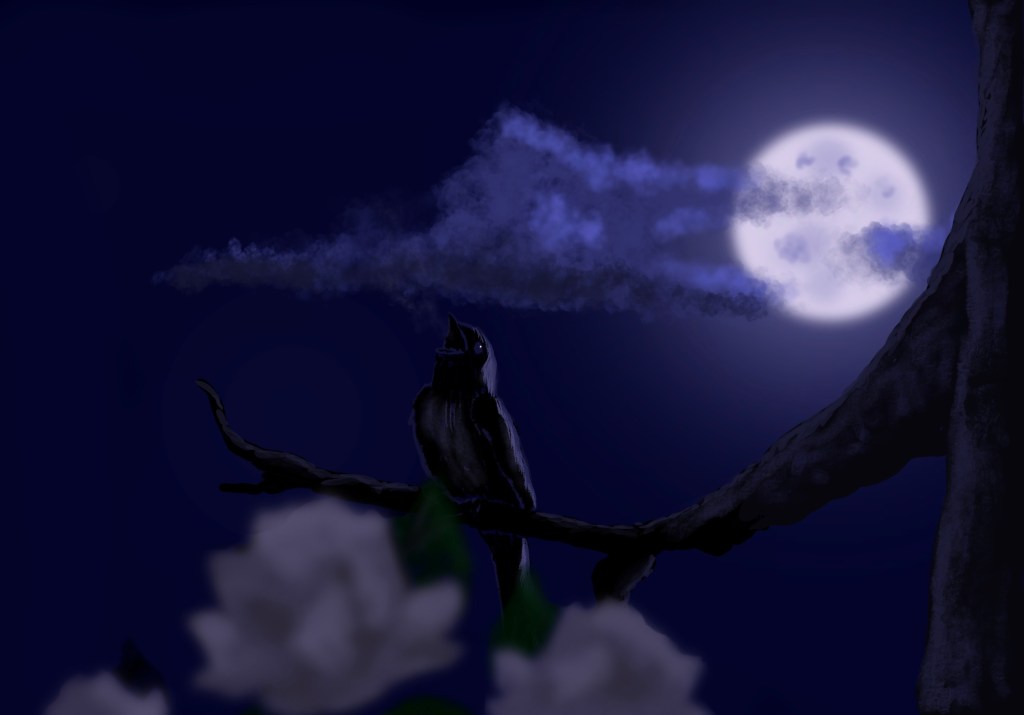
The following is a character piece I wrote over the Christmas break. It was inspired by my reading and contemplating Oscar Wilde’s tale “The Nightingale and the Rose”. My re-reading of this children’s story was, in turn, inspired by a conversation I had with a colleague in which we commiserated with one another on how painful it is to pour out our passions to ambivalent students.
My colleague mentioned that a college professor of his had insisted he read the story in preparation for a career in teaching. “You will feel this pain,” his professor told him. “You will have times where you will bleed out in order to create the perfect rose for your students, only to have them find no use for it and throw it in the street.”
I must admit, I have felt this keenly over the past year of teaching. I have holes in my tongue from the times I have refrained from telling my students about the amount of time I wasted getting ready for a particular class that they disrespected. Even my piano students often have no idea that I have spent many an evening making a more modern, readable edition of a piece they want to play.
But, of course, with contemplation come thoughts that lie deep beneath the surface. Oscar Wilde himself said that the strength of tales such as “The Nightingale and the Rose” is that there are so many interpretations, so many morals to be mined from their quarry. What did he actually want us to understand from the story? In his inimitable way, he refused to tell us. And so, we must posit our own interpretations.
As someone who is constantly trying (and failing) to model myself after Christ, I find something of the Messiah in the little nightingale. Now, this is not intended to be a theological post, and I won’t extend this metaphor beyond that initial comparison. However, I think it is easy to lose sight of the possibility that the little nightingale sacrifices herself for the mere chance of creating beauty for someone who needs it not because it is in the nature of the young student to need the beauty, but in the nature of the nightingale to offer it.
Teachers, we must remember that we educate from our nature. It should be in our nature to prick ourselves with the thorns in order to make the beautiful, red rose. Let the student do with it as he sees fit. I don’t offer this perspective so that we can deny the bittersweetness that is education, but so that we can embrace it.
 Classical Connections
Leave a comment