The modern piano teacher who wishes to incorporate the resurgent partimento tradition into the lesson faces a challenge: how does one add yet another skill and concept to an already overpacked curriculum? The answer lies in creating a symbiotic relationship between repertoire and partimento knowledge. The student’s piece can teach partimento, while partimento concepts can clarify structural elements and deepen understanding of the piece.
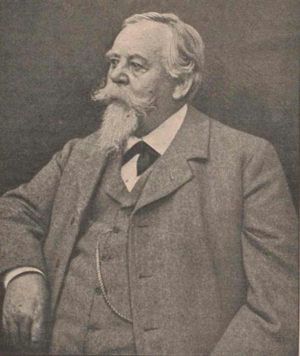
Cornelius Gurlitt was a prolific composer of pedagogical piano music. Today, piano students often encounter his short pieces as “repertoire builders”. Teachers assign the pieces as preparatory material for larger works in the Romantic style. However, we as teachers may be missing a great opportunity to teach partimento and improvisation through his works.
Our focus in this essay will be his Etude in D minor, Op. 82, No. 65, currently a Level 2 performance choice in the Royal Conservatory’s piano syllabus. Although an abbreviated form of this lesson can be taught to Level 2 students, I recommend using the fuller lesson only for students at Level 4 or above. Learning or even revisiting a piece at a lower level can aid the student in mastering a new concept or skill.
This piece is a short 19 measures long, with about half of the musical material consisting of various iterations of a compound cadence. These cadences are manifested in 3 voices, with the left hand playing the bass and the right-hand dyads sounding the other two voices in eighth note pairs.
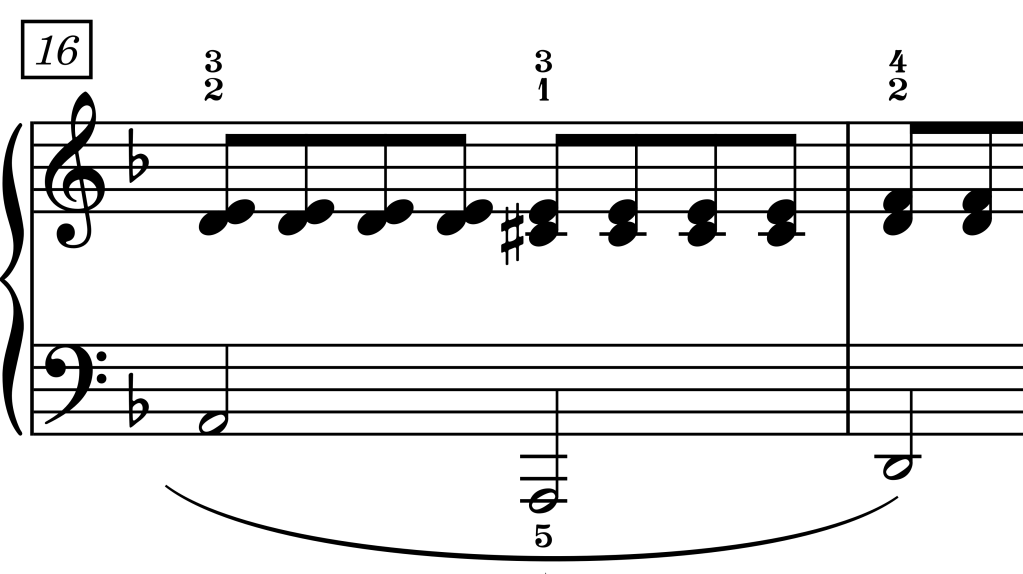
To teach the compound cadence using this piece, try following these steps:
First, guide the student through the cadences, noting the confirmations of d minor and F major.
Second, build the cadence in terms of figured bass. Guide the student through the two stages of the dominant harmony in the compound cadence.
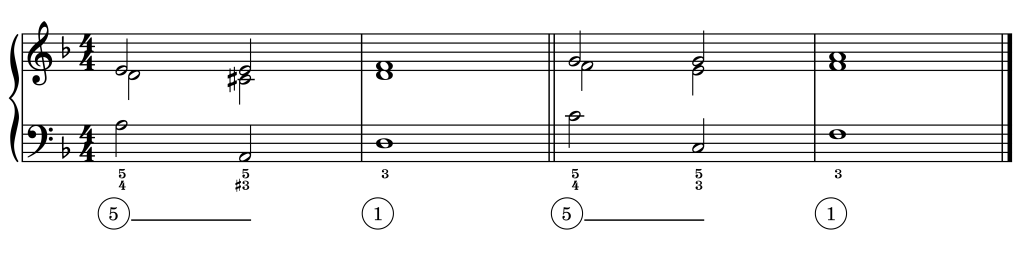
In step three, have the student recognize the dissonant interval of a fourth occurring above the bass on ⑤. Note that the fourth moves to the third in the next stage of the cadence. Any student studying at this level should be comfortable recognizing and playing the four consonances and the four dissonances.
Fourth, have the student practice the d minor cadence in the three voices using only half notes. Once the student can play this comfortably, have him build the F major cadence in a similar fashion. After checking the pitches, have the student practice the F major cadence until comfortable.
By the fifth step, the student should now be able to build the compound cadence in this similar texture in the related keys: C major, B-flat major, a minor, and g minor.
Once the student can play the compound cadence in these keys, he is ready to assimilate it into his schematic vocabulary. The final step is to encourage the student to use this new cadence in his own improvisations or short pieces.
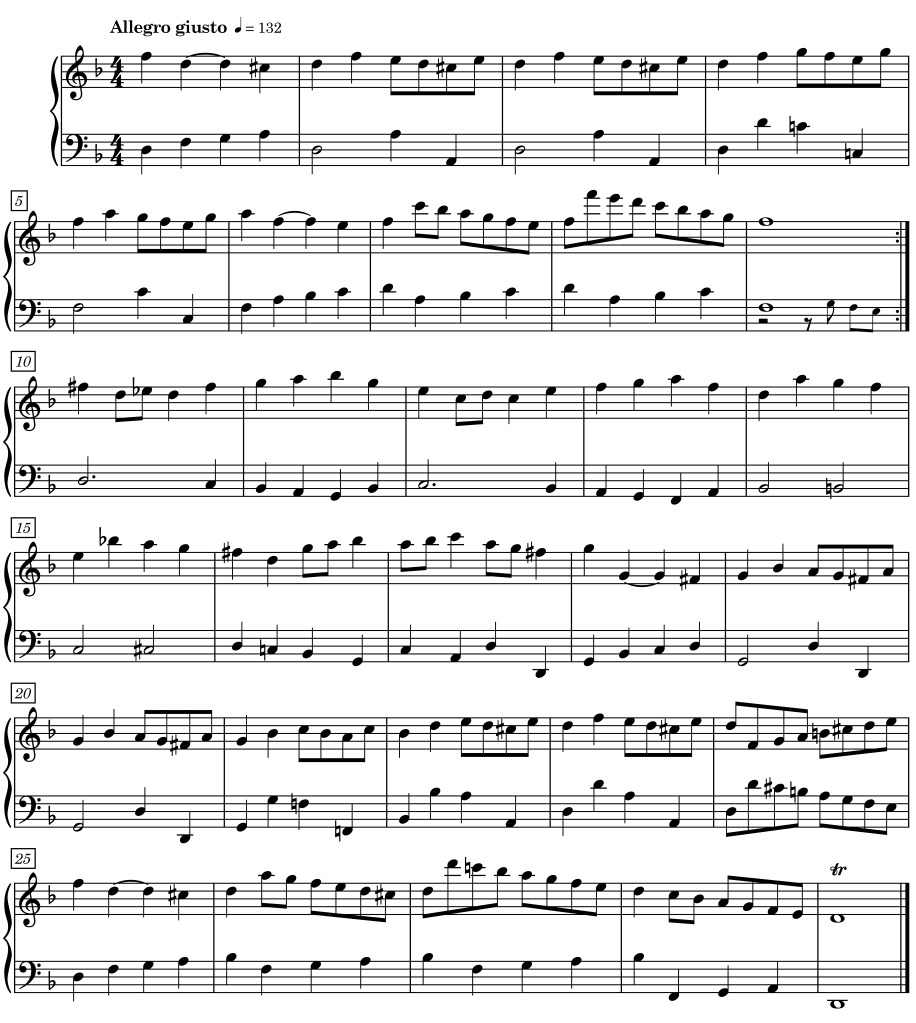
For a more advanced study, the compound cadence can be combined with this piece’s i >III modulation model to create a new partimento. This can be extended to include the related keys, giving the student plenty of practice. Some other formulaic cadences and bass motions can fill in and add variety to the musical passages. The teacher should experiment with her own partimento and encourage the student to either compose or improvise above it. I have included a sample partimento and a related two-voice intavolatura as an example.
Partimento

Intavolatura
 Classical Connections
Leave a comment